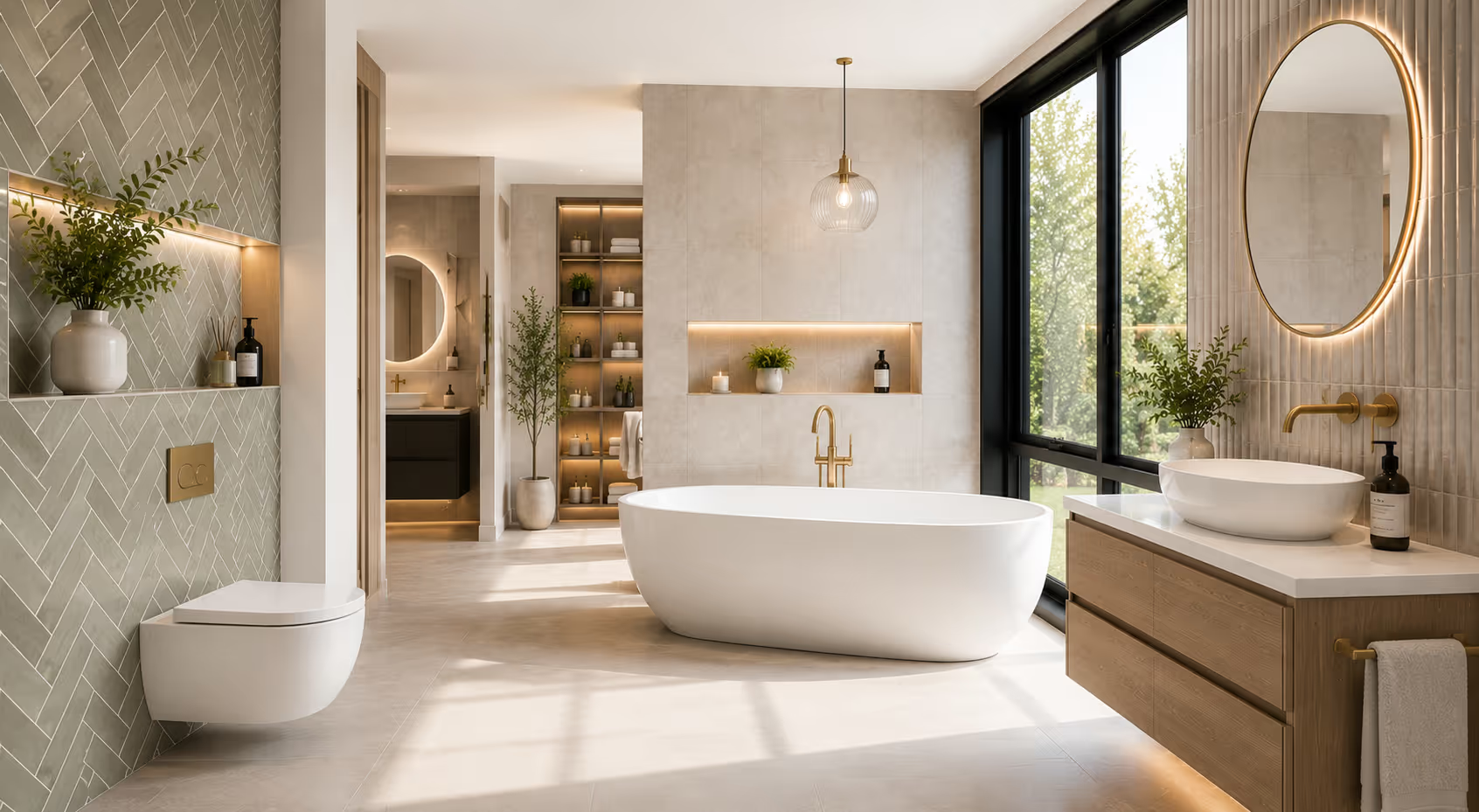
Large format tiles: the case for going bigger than you planned
Fewer grout lines, more visual space, and a finish that looks far more expensive than it is. We make the case for sizing up.
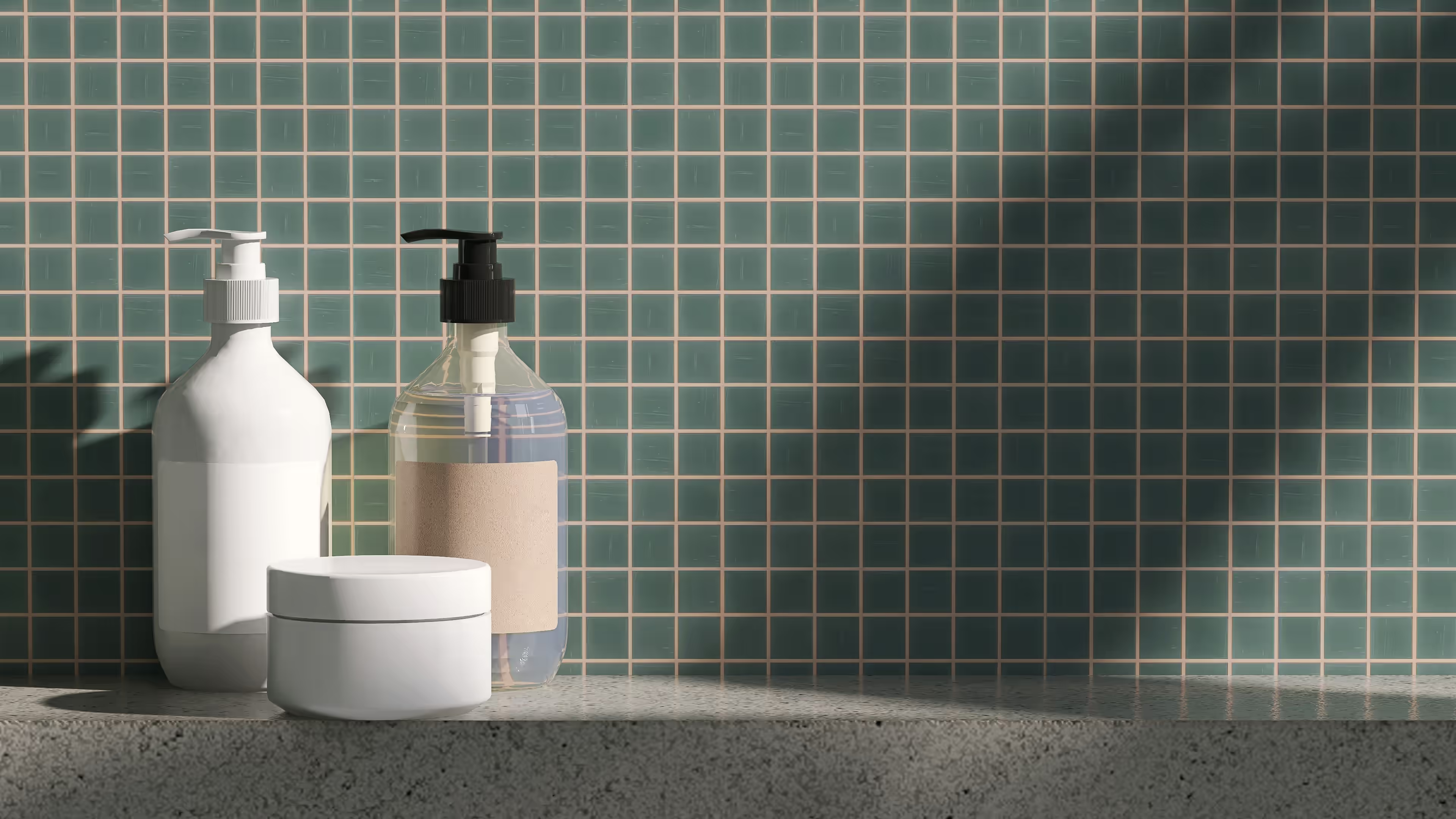
Tile size is one of those decisions that most people underestimate. You find a tile you love, you order it in the size it comes in, and you move on. But if you're renovating a bathroom, kitchen, or living space and you haven't considered going larger than your instinct suggests — it's worth pausing before you commit. Here's why bigger is almost always better.
What counts as large format?
Large format tiles are generally considered anything from 600x600mm upward — though the category now extends to genuinely oversized slabs of 1200x2400mm and beyond, particularly in porcelain. The most popular sizes we see in our showroom are 600x600mm, 600x1200mm, and 800x800mm — practical enough to work in most domestic spaces, large enough to make a meaningful difference to how a room feels.
The shift toward larger formats has been one of the most consistent trends in tile design over the past decade, and it shows no signs of reversing. Once you understand why, it's easy to see that this isn't a passing fashion — it's a fundamentally better way to tile a space.
Fewer grout lines change everything
The most immediate and obvious advantage of large format tiles is fewer grout lines. This might sound like a minor detail, but it has a significant effect on how a room reads visually.
Grout lines interrupt the eye. In a tiled space, every line is a visual stop — a moment where the surface breaks and the pattern resets. In a small bathroom tiled with 300x300mm tiles, there are dozens of these interruptions across every surface. The eye registers them constantly, even if you're not consciously aware of it, and the cumulative effect is a space that feels busier and smaller than it actually is.
Large format tiles reduce those interruptions dramatically. A bathroom floor tiled in 800x800mm porcelain might have four or five grout lines across its entire width. The surface reads as continuous, the eye travels further without stopping, and the room feels larger and calmer as a result.
The illusion of space
This is particularly valuable in smaller rooms — bathrooms, en-suites, cloakrooms — where every visual trick available is worth deploying. But it applies equally in larger spaces. An open-plan kitchen-diner tiled in large format porcelain will feel more cohesive and expansive than the same room tiled in a smaller format, even if the difference in actual floor area is zero.
The effect is amplified when the same tile is used across multiple surfaces — floor and wall, or floor running continuously from inside to outside. Continuity of surface is one of the most powerful tools in interior design, and large format tiles make it easier to achieve.
They look more expensive than they are
This is worth saying plainly: large format tiles consistently read as more premium than smaller ones, even when the cost per square metre is comparable. There's something about the scale and confidence of a large slab that signals considered, deliberate design — the kind of choice that an architect or interior designer would make.
For a bathroom renovation where the finish matters — where you want the end result to feel genuinely luxurious rather than just functional — tile size is one of the highest-impact decisions you can make relative to its cost. Choosing a larger format in a simple, well-executed material will outperform a smaller tile in a more decorative pattern almost every time.
What about awkward spaces?
The most common objection to large format tiles is the concern about waste — that in a small or irregular space, the cuts required will be excessive and the material cost will escalate. This is a legitimate consideration, but it's often overstated.
A good tiler will plan the layout before a single tile is cut, working out the most efficient placement to minimise waste and ensure cuts fall in logical places — typically at edges and behind furniture rather than in the middle of a floor. In most standard bathroom or kitchen layouts, the additional waste from large format tiles is less significant than people expect.
The other consideration is weight and substrate. Large format porcelain tiles are heavier than smaller ceramic ones, and they require a sufficiently rigid and level substrate to bed correctly. This is something your tiler will assess before the job begins — and in most cases it simply means ensuring the subfloor is adequately prepared, which is good practice regardless of tile size.
Choosing the right finish
Large format tiles come in a wide range of finishes, and the choice has a significant effect on the end result. A few things worth knowing:
Matte and honed finishes absorb light softly and feel grounded. They're forgiving of footprints and watermarks, which makes them practical for floors in high-use bathrooms and kitchens.
Polished and gloss finishes reflect light and add brightness — useful in darker spaces or where you want to amplify natural light. They require more maintenance to keep looking their best but the effect, particularly in a well-lit bathroom, is genuinely impressive.
Stone-effect porcelain is currently one of the most popular large format options — it replicates the look of marble, slate, or travertine at a fraction of the cost and with significantly better durability and water resistance. In large format, the veining and natural variation of a well-made stone-effect tile reads as very convincing.
The bottom line
If you're planning a tiling project and your instinct is to go for a mid-sized tile — 400x400mm, 450x450mm — it's worth coming into the showroom and seeing what the same space looks like in a larger format before you decide. The difference is often striking, and once you've seen it, the smaller option rarely feels quite as appealing.
We stock a wide range of large format tiles across different finishes, materials, and price points — all available to view in real room settings in our Belfast showroom. Come and see for yourself.