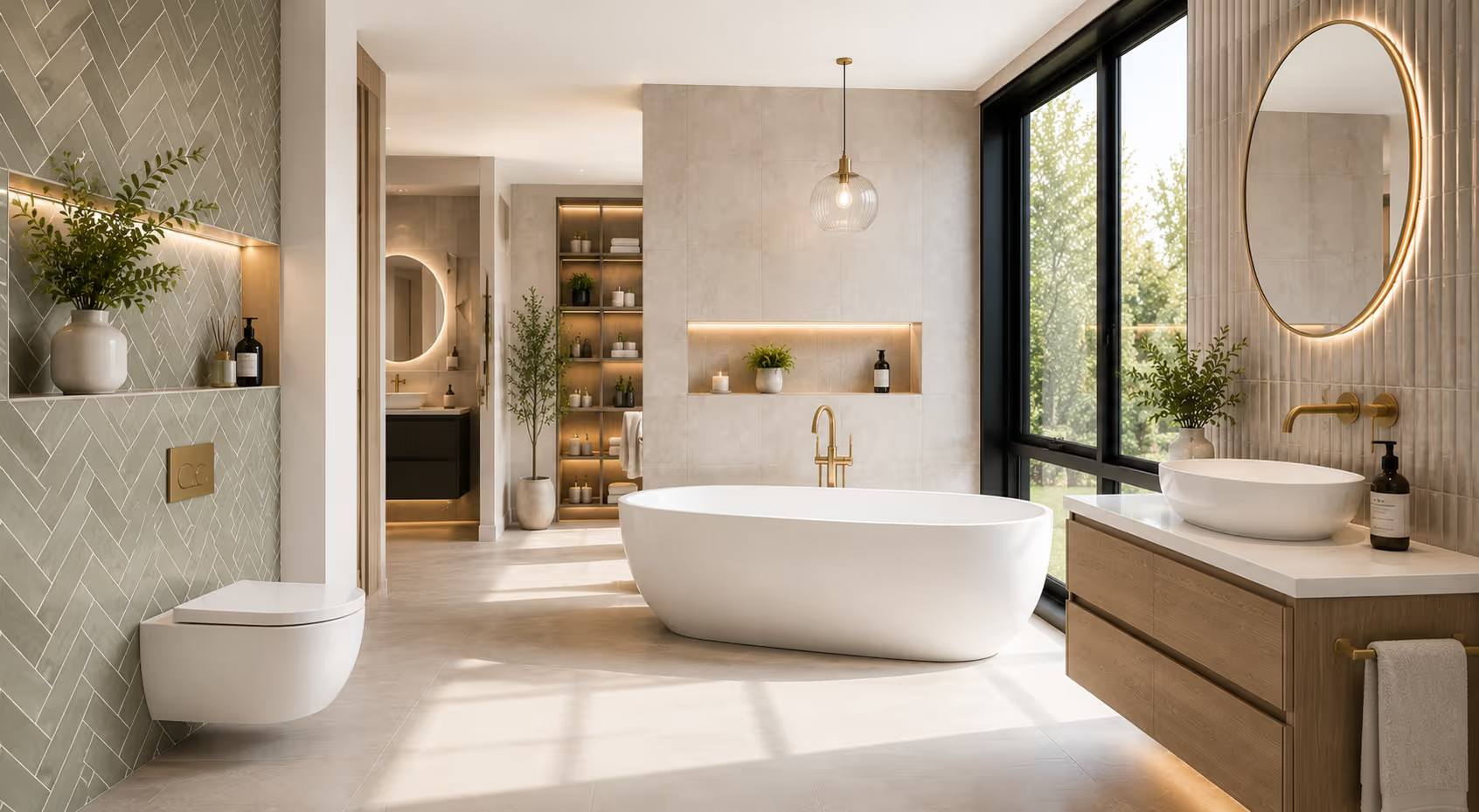
Why a working fireplace is still the best focal point in any room
In a world of mood lighting, there's still nothing quite like a real fire. Here's why it belongs in your home.
Every room needs something to anchor it. A point of reference that the rest of the space organises itself around. For centuries, that was the fireplace — and despite everything that's changed in how we heat and decorate our homes, nothing has come close to replacing it. Here's why a working fire still belongs in your home.
The focal point problem
Interior design has spent the last two decades trying to solve the focal point problem created by the decline of the open fire. The television became the default answer — and with it came the awkward reality of sofas arranged around a black rectangle that dominates the room when on and looks like nothing at all when off.
The media wall was the next attempt at a solution — a way of framing the television in something more architectural and considered. And while a well-designed media wall is genuinely impressive, it's still fundamentally organising a room around a screen.
A working fireplace solves the problem differently. It gives a room a focal point that is alive — that changes, that produces warmth and light and sound, that demands nothing of you except to sit near it. No screen, no remote, no streaming subscription. Just fire.
What makes a fireplace a focal point
The reason a fireplace works so well as a focal point is that it appeals to something instinctive. The draw toward warmth and light is built into us — it predates architecture, interior design, and every trend that has come and gone in the meantime.
This means a fireplace doesn't have to work hard to command attention. It doesn't need to be oversized or overly decorated. A well-proportioned surround, a quality fire, and a considered hearth will do the job naturally — drawing the eye, anchoring the furniture arrangement, and giving the room a sense of purpose that's difficult to manufacture any other way.
Gas, electric or solid fuel — which is right for you?
The working fireplace of 2024 looks very different to the open coal fires of previous generations. The options available now are wider, more efficient, and more flexible than most people realise — and the right choice depends on your home, your lifestyle, and what you want from the fire.
Gas fires are the most popular choice for good reason. They offer genuine flame — real, flickering, atmospheric fire — with the convenience of instant on and off, precise heat control, and no fuel to store or manage. Modern gas fires are highly efficient and available in a wide range of styles from traditional to contemporary. If you have a gas supply and an existing chimney or flue, a gas fire is usually the most straightforward route to a working fireplace.
Electric fires have improved enormously in recent years. The flame effect technology in premium electric fires is now sophisticated enough to be genuinely convincing — particularly in media wall applications where the fire sits within a larger architectural surround. Electric fires require no flue or gas supply, which makes them the most flexible option in terms of placement. They produce no emissions and are simple to install, though they don't generate the same radiant heat as gas or solid fuel.
Solid fuel and wood-burning stoves remain the most atmospheric option — nothing replicates the look, sound, and smell of a real wood fire. Modern stoves are far more efficient than open fires and produce significantly less particulate matter, making them a more responsible choice than their predecessors. They do require a suitable flue, regular maintenance, and a supply of seasoned wood or approved solid fuel — but for many homeowners, that involvement is part of the appeal.
The surround matters as much as the fire
The fire itself is only part of what makes a fireplace a focal point. The surround — the mantelpiece, the inset, the hearth — is what gives it architectural weight and presence in the room.
A well-chosen surround does several things simultaneously. It frames the fire, creating a visual boundary that tells the eye where to look. It provides a horizontal surface at eye level — one of the most instinctively satisfying elements in any room — for objects, artwork, or simply empty space. And it anchors the wall, preventing the fire from floating in the middle of a surface without context.
The relationship between fire and surround is worth spending time on. A contemporary gas fire in a traditional marble surround creates an interesting tension — modern warmth in a classical frame — that can work beautifully in the right interior. A freestanding stove with a simple slate hearth and no surround at all makes a completely different statement. Neither is wrong — but the choice should be deliberate.
Seeing it in person makes all the difference
Choosing a fireplace from a website or a brochure is difficult. The scale is hard to judge, the flame effect is impossible to assess from a static image, and the relationship between fire, surround, and hearth only becomes clear when you see it assembled in a real setting.
Our Belfast showroom has an extensive range of working fireplace displays — gas fires, electric fires, and stoves — all set up so you can see them operating, assess the flame quality, and understand how different combinations of fire and surround work together. It's the most reliable way to make a decision you'll be happy with for years.